Author Archives: Brad

Design with a Purpose by Doug Myers

It’s perplexing. Much of our designed world, the things that we use and rely on in our daily lives, can simply create frustration. Product packaging is one area that I often cannot figure out. I recently purchased a couple of CD’s for the holidays and was surprised to find that a simple solution for removing the plastic was still not in place. For me, opening CD’S has become synonymous with frustration. Once you find the elusive seam, you have to scratch and pick to remove the shrink, then thinking you are home free you remember that a security sticker is still between you and the CD. After a few more “what the french” moments you are able to remove the cd from its casing. Rarely will I open a CD without these small moments of frustration. As an isolated example this may seem trivial but there are so many examples of poorly designed things that create moments of annoyance that can accumulate consciously or subconsciously and simply spin our day in the wrong direction.

As a landscape designer I have an interest in designing projects that not only serve the needs of my clients, but also, at their best, help give meaning to their lives. Many of the designed landscapes I observe on a daily basis not only fail to inspire but also fail to meet the needs of the individuals they are intended for.  Although many are competently installed and well cared for there is still something missing. The topic of purpose in landscape design was suggested as the theme for this blog, but purpose alone does not create good design. Even the CD packaging was designed with a purpose. The best design goes beyond purpose and involves deliberation and inspiration.

Deliberate purpose is comprised of the practical, functional and utilitarian needs of the client. A designed landscape should at very least meet these needs. The space has to be the right size to accommodate the number of intended users, the circulation through the spaces should be fluent and it should be constructed to last for decades. Ideally it is built on budget and possibly in phases which may help eliminate design compromises.  In a nut shell, successful deliberate purpose in design requires a willingness to engage in process oriented thinking and avoid the temptation to simply sell a product. Be careful to check your ego at the door before sitting down to work. It is easy to become enamored with our ideas, and consequentially, stifle the voice inside your head that allows you to transcend, evaluate and modify your concept.

The environment should also possess a quality that transcends the deliberate purpose of the project. Projects with inspired purpose go beyond competence and are satisfying in deeper ways – aesthetically, emotionally, intellectually and perhaps even spiritually. The best have an intuitive balance between complexity and simplicity, allowing the differences to enhance, rather than cancel each other out. Mastering this is very difficult, and it is a puzzle which I am continuously trying to solve and in no way have mastered. Inspired purpose speaks of true design, not simply decorating or imitating an image or idea from a book or magazine.

Between the two areas of deliberate and inspired purpose, deliberation without inspiration is relatively easy to achieve and much more widespread. Consequently, the presence of inspired purpose in design combined with deliberation increases the value of the landscape considerably.  This is true in all design, not just landscape. Take the ipod as an example. It is a product that effectively balances simplicity and complexity, typically does less than other mp3 players, generally costs more, but yet, manages to outsell its competitors by wide margins. Truly deliberate and inspired.

Good design offers us an opportunity to bring solace, meaning, and value to our daily lives. As I sit in my Eames lounge chair typing this blog, it occurs to me that well designed things tend to become a seamless part of our lives, but it is easy to take them for granted. As you look around your home or office, just about everything has been designed. I am sure each of us can name examples of well designed and poorly designed things, whether it is a cell phone, a chair, or the actual space in your home, or the space around your home. If we compare these spaces or things with others, we find that most of them are fairly well made; the thing that really differentiates them is the harmonious use of deliberate and inspired purpose in the design or lack thereof. I will leave you with a quote from Charles Eames. “Design is a plan for arranging elements in such a way as best to accomplish a particular purpose.”
Rain Gardens

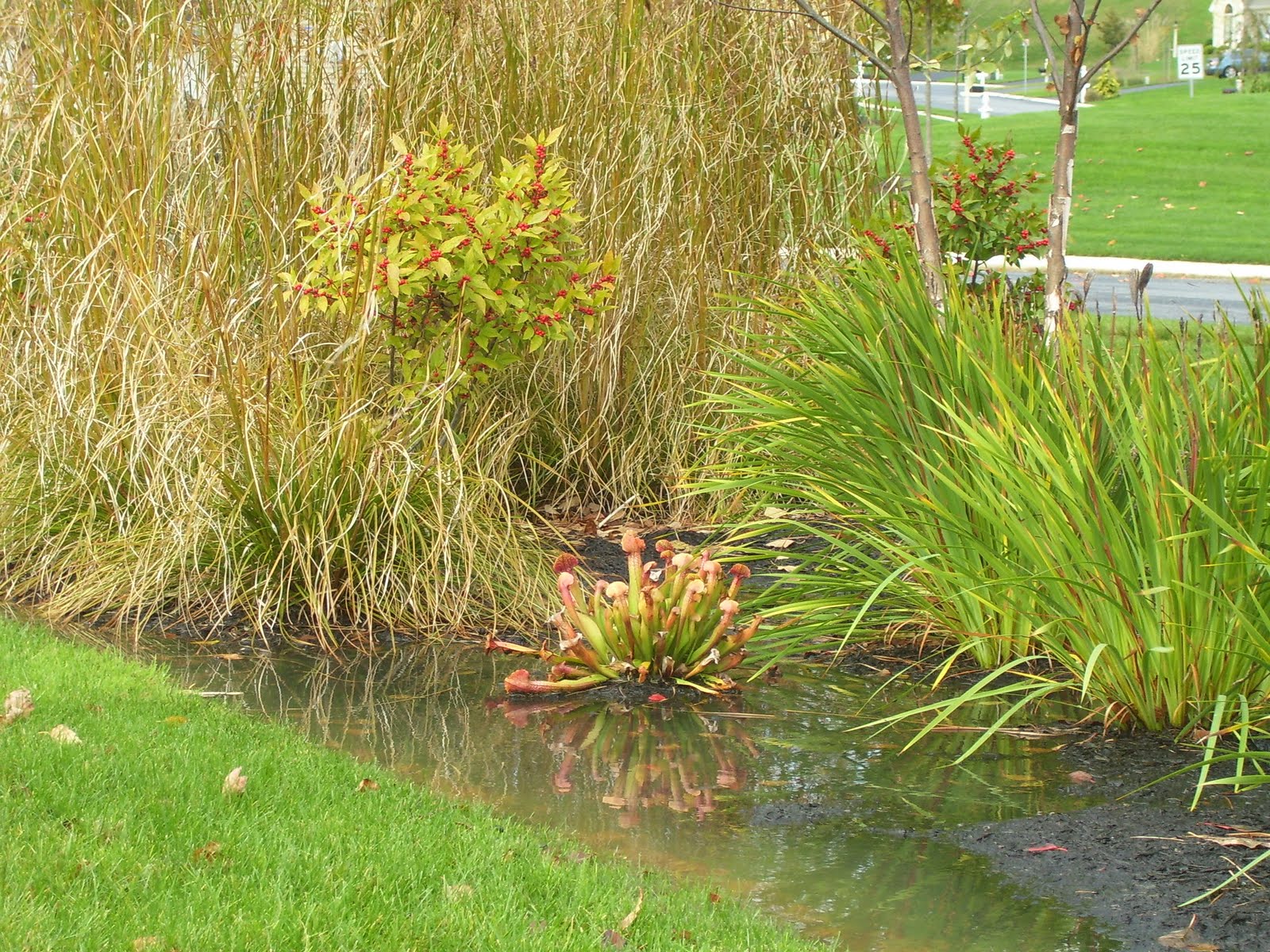
Rain Gardens: You may have heard this term recently wondering what is a rain garden. Well with all this rain, I thought I would address Rain Gardens. First let’s address the problem we are facing. I’m sure you have notice a few places that have flooded in the last week or two. When we force all the runoff off of our properties it flows down our street and eventually into the streams. Other than the obvious problem of flooding blocking our road there is a bigger issue. The increased volume erodes the stream’s banks. When the water slows down it deposits the sediment containing fertilizers from our lawns, farms, etc. Most of these little tributaries end up in the Chesapeake Bay, resulting in polluting a very sensitive ecosystem.

So what can we do? There are a

couple simple things we can do on our small properties to make an impa

ct. Water harvesting is the collection of rain water to be reused in some manner. Rain gardens, rain barrels, and underground cisterns are most common ways to collect rain water.

Rain gardens usually do not collect the water for human consumption

, but slows down the water allowing it to soak back into the water table. This can be done by cont

ouring the ground forming small basins. Typically we see swales that channel the water quickly away. The small basins form small puddles in designated areas. Rain Gardens also have plant materials that thrive in moist soils. These gardens give you an opportunity to plant varieties of plants that you would not otherwise be able to have. This may increase your population of butterflies and beneficial insects.

Some of my favorite Rain Garden plants are:
 
Trees: River Birch, Black Gum, Sweetbay Magnolia, Witchhazel, and Sycamore
Shrubs: Winterberry Holly, Itea , Virginia Sweetspire, Inkberry Holly, Redtwig Dogwood, Highbush blueberry, and Red Chokeberry


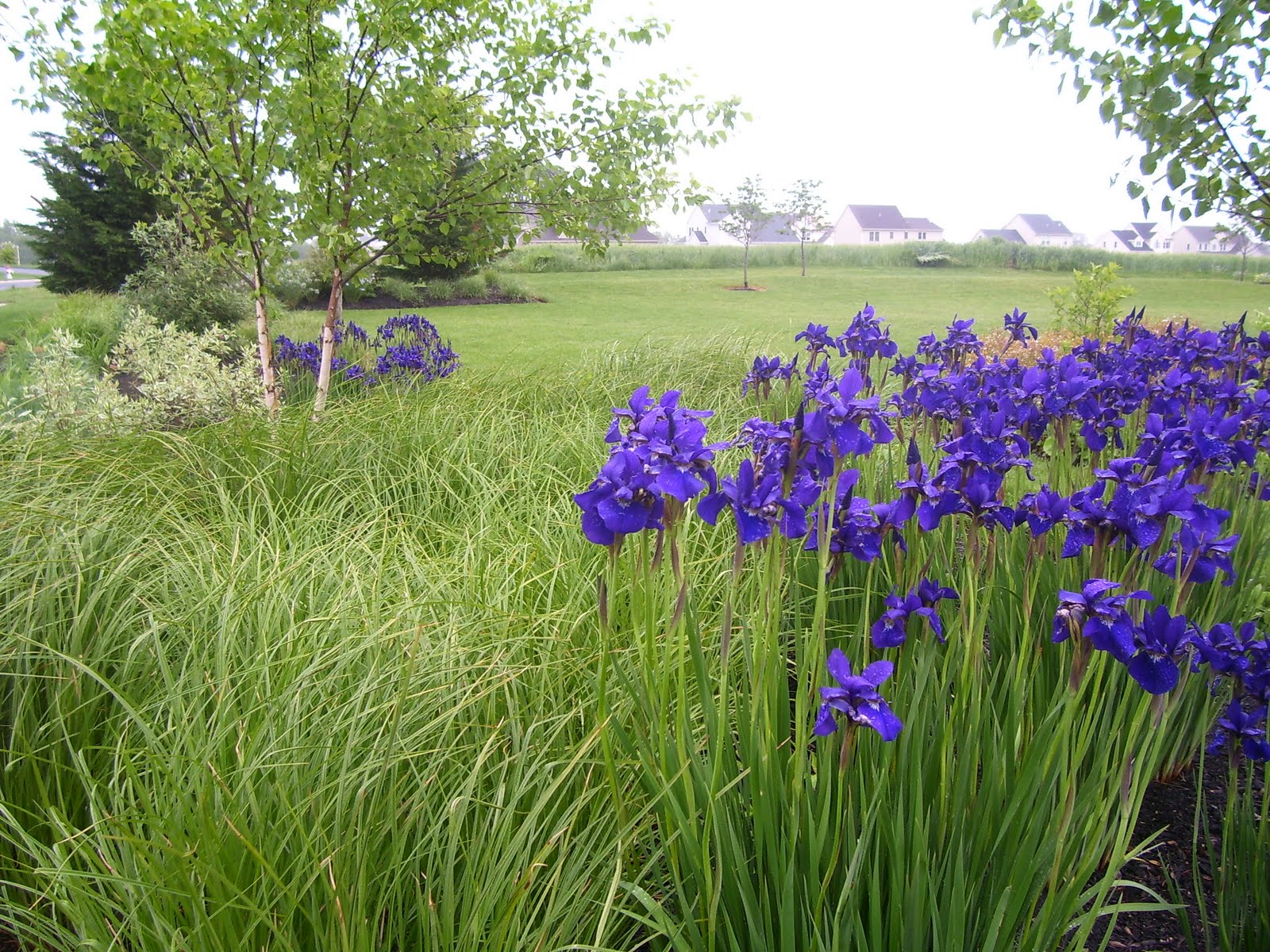
Perennials: Swamp Milkweed, Most Sedges, Joe Pye, Weed, Swamp Hibiscus, Blue flag and Siberian Iris, Most Ferns, and Water Forget-me-nots
Often this does not cost the homeowner any more money. Sometimes it can even save money. If you have a portion of your property that collects water, don’t pay to dry it out. All you have to do is change the plant varieties to plants that will thrive in this environment. I agree one property does not make a difference, but we can all do something to help.

Fall planning for spring pleasure!

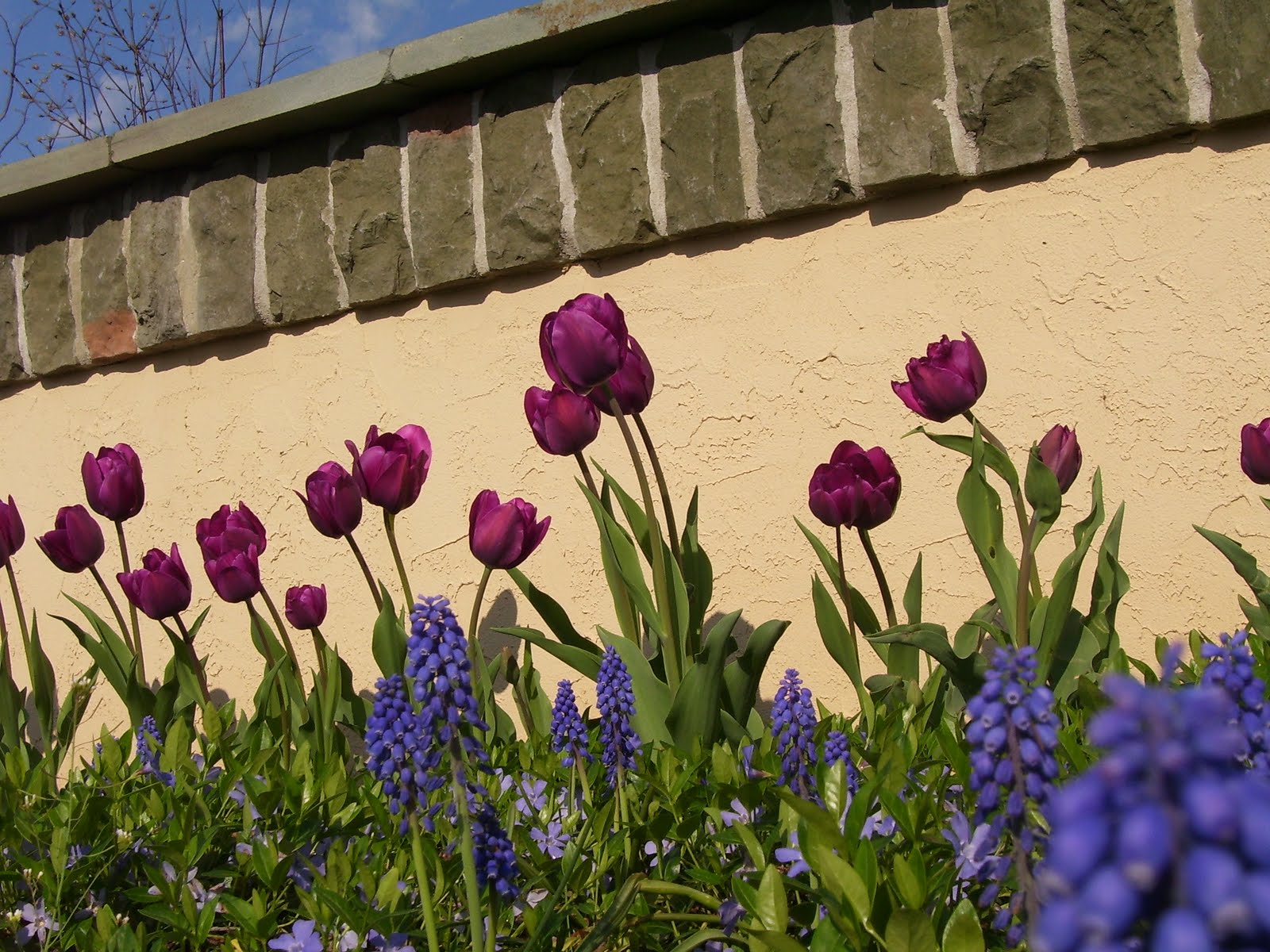
Now is the time! I know a lot of people are tired of the hot dry summer, but now is the time to start planning for spring. Are you one of those people each spring regretting not planting bulbs the previous fall? Bulbs are a cheap and easy way to welcome spring into your garden. If you have Vinca minor (myrtle) ground cover, here is one simple trick to add more bang. Try adding Grape Hycinths throughout your vinca ground cover. The flowering times overlap extending the flower time of the bed space while giving a stronger bang of blue color. Also don’t be afraid if your planting depth vary a little. This will cause the shallow bulbs to start flowering a little premature while the deeper bulbs will be lagging a few days behind. This is another easy way to extend that color.

How to Plan Your Landscape for The Fall

Now is also a great time to contact your Landscapes Design Professional. He or she can begin to pull your ideas together. Starting these talks now gives you plenty of time to work through the design process. Here is a link showing our design process. https://www.rivervalleylandscapes.com/process.html Many Landscape Design Professionals will have their own process to go through, but getting an early start will give you time to make any changes before the equipment shows up at your property. A lot of companies may even give better pricing to ensure a strong start to the new year.


Another advantage of starting the process now is to give you all next year to enjoy your new space. Obviously the earlier you get started the sooner it will get finished. Some parts of the project may even be worked on throughout the winter months.


Start planning today. The sooner you start the sooner you enjoy!

Part Two: A not so behaved native – Senecio aureus

Cutting Ground Coverage Of The Senecio Aureus Perennial

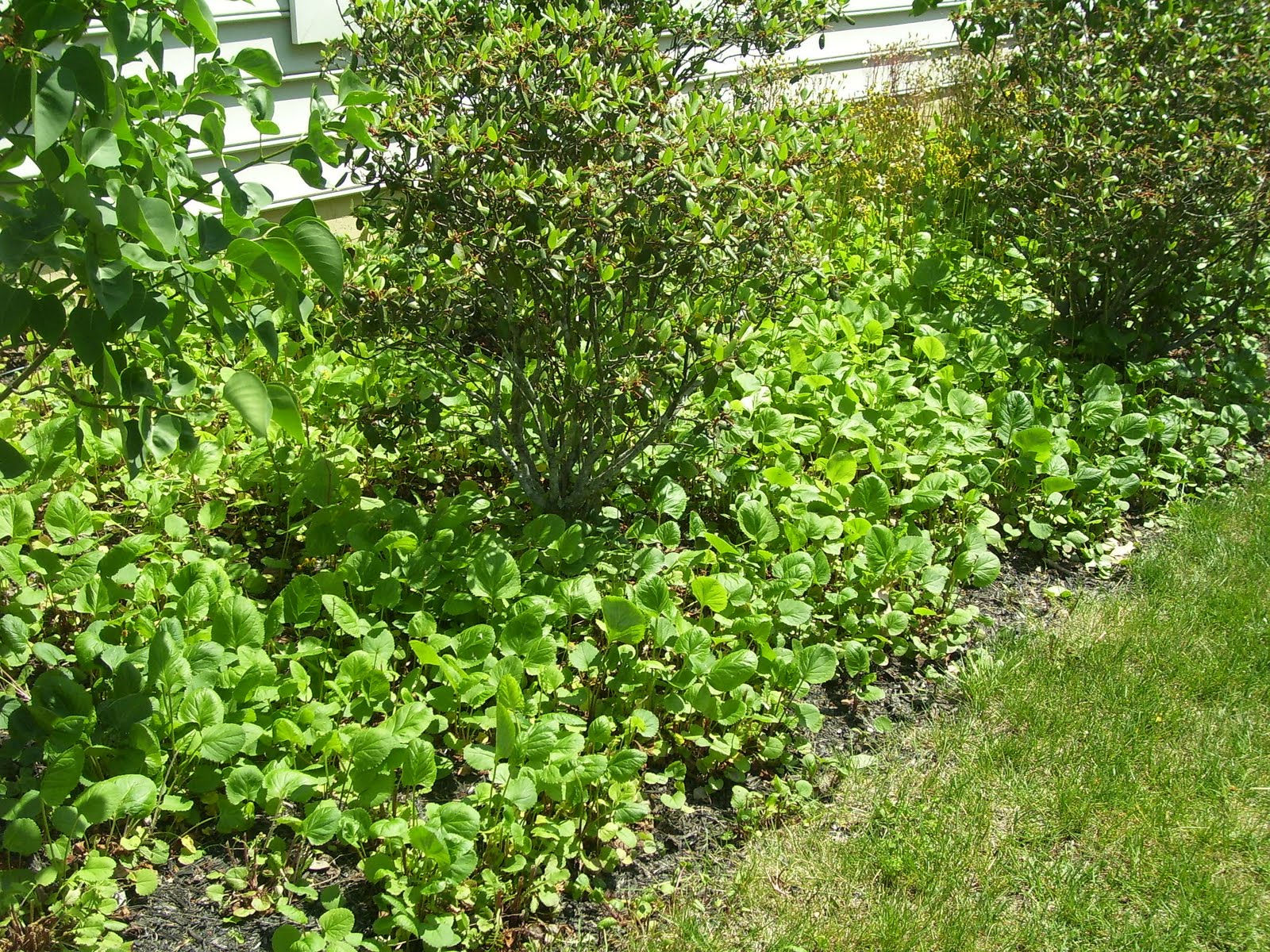
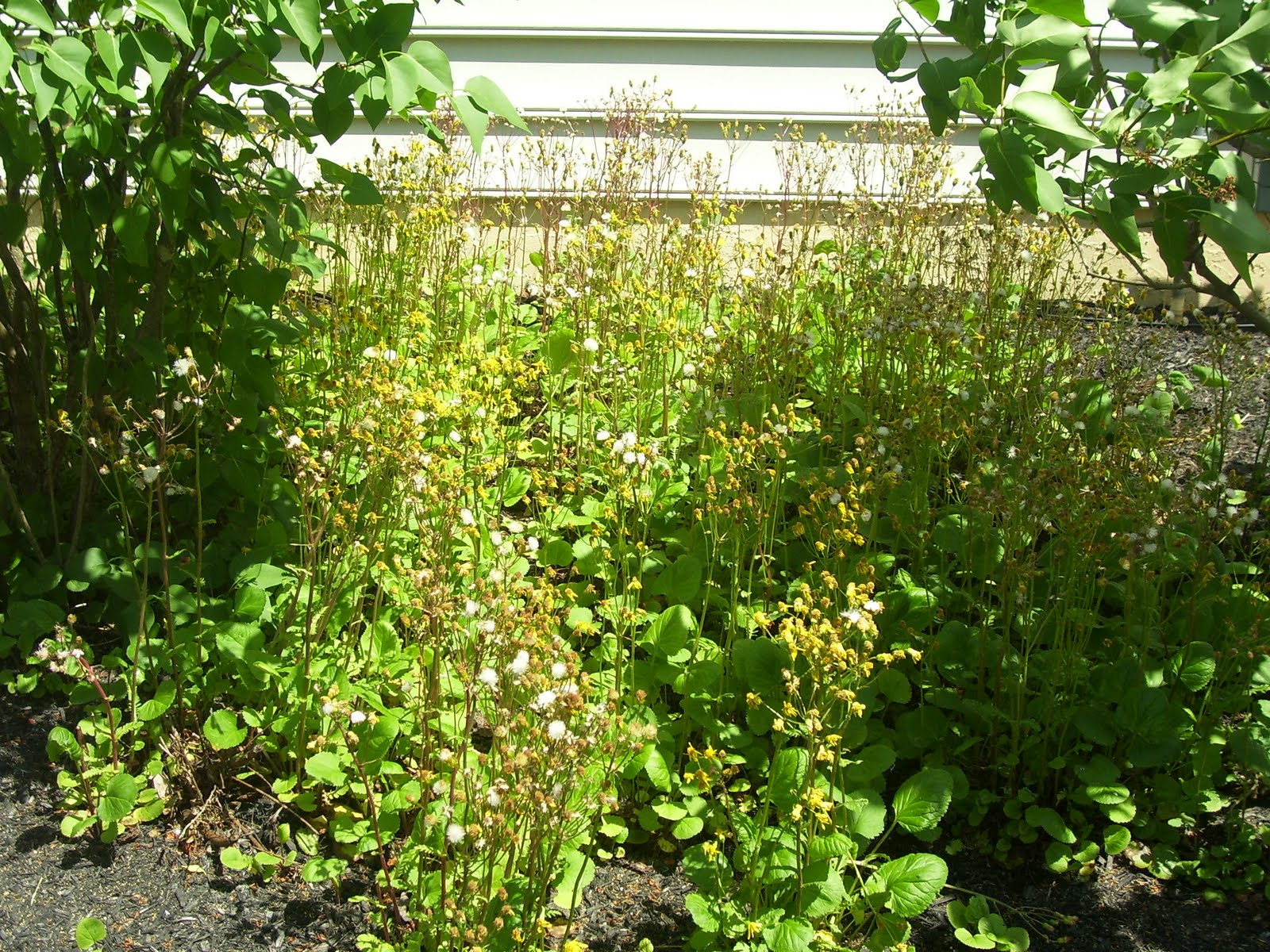
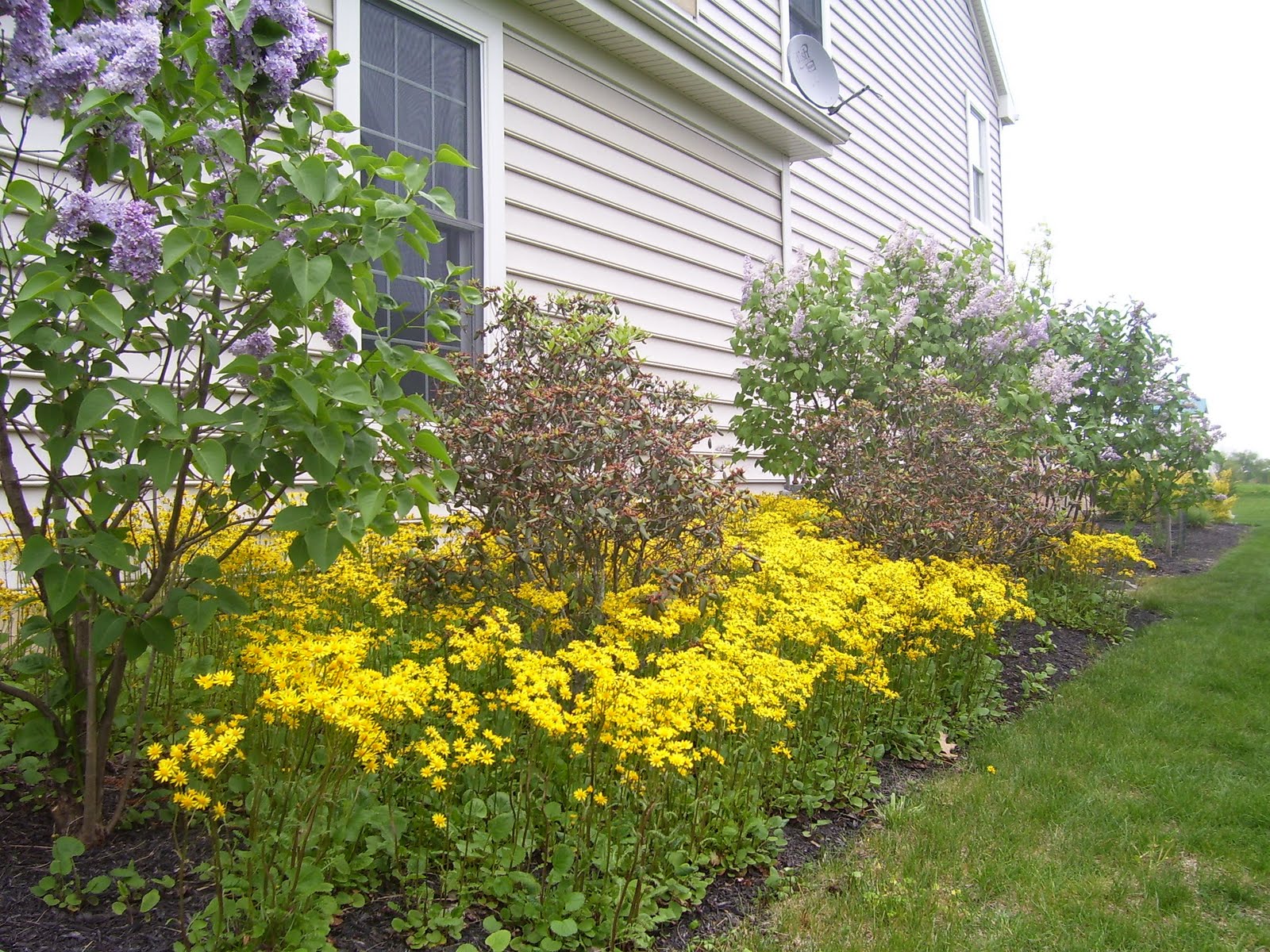
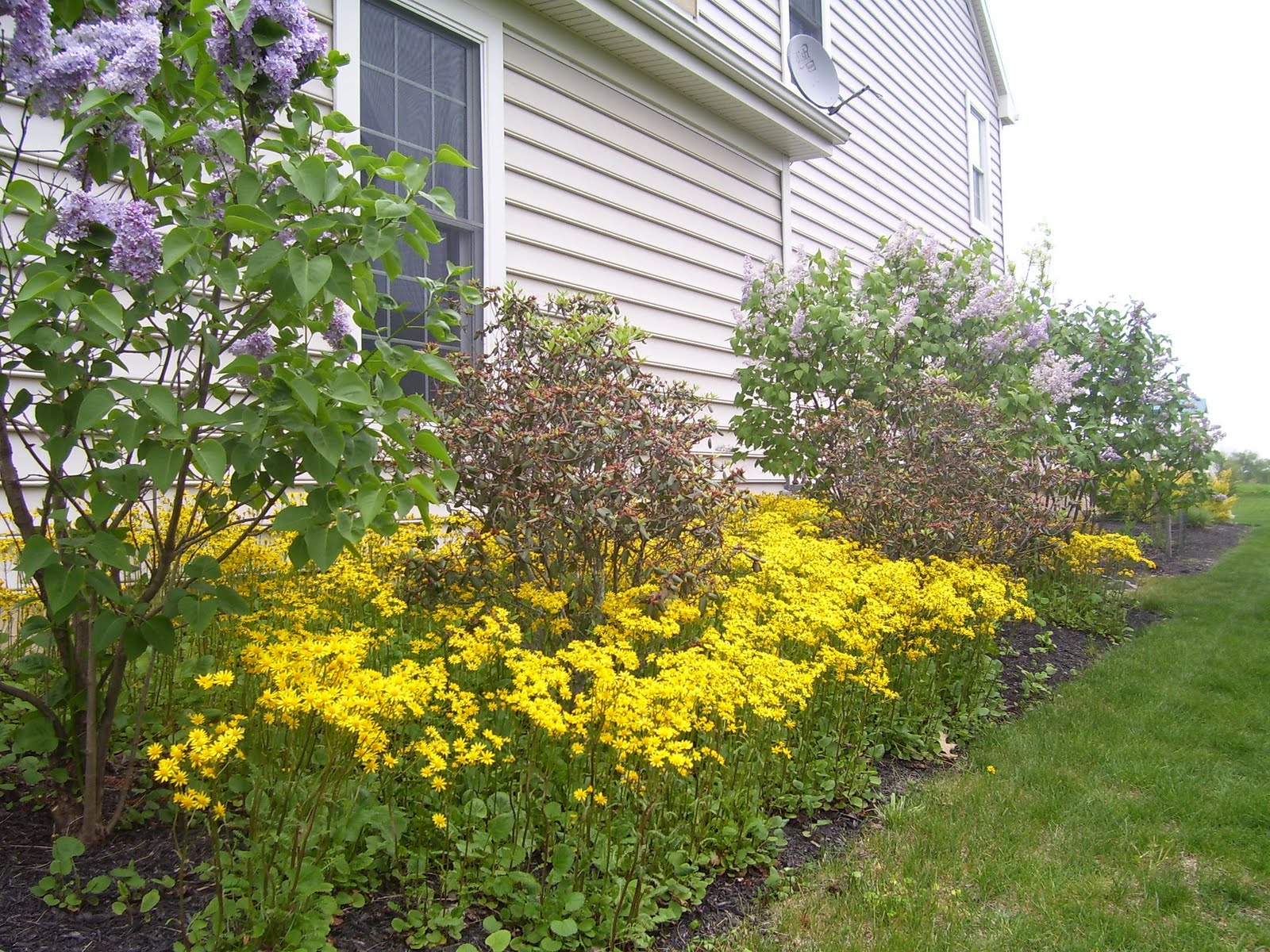
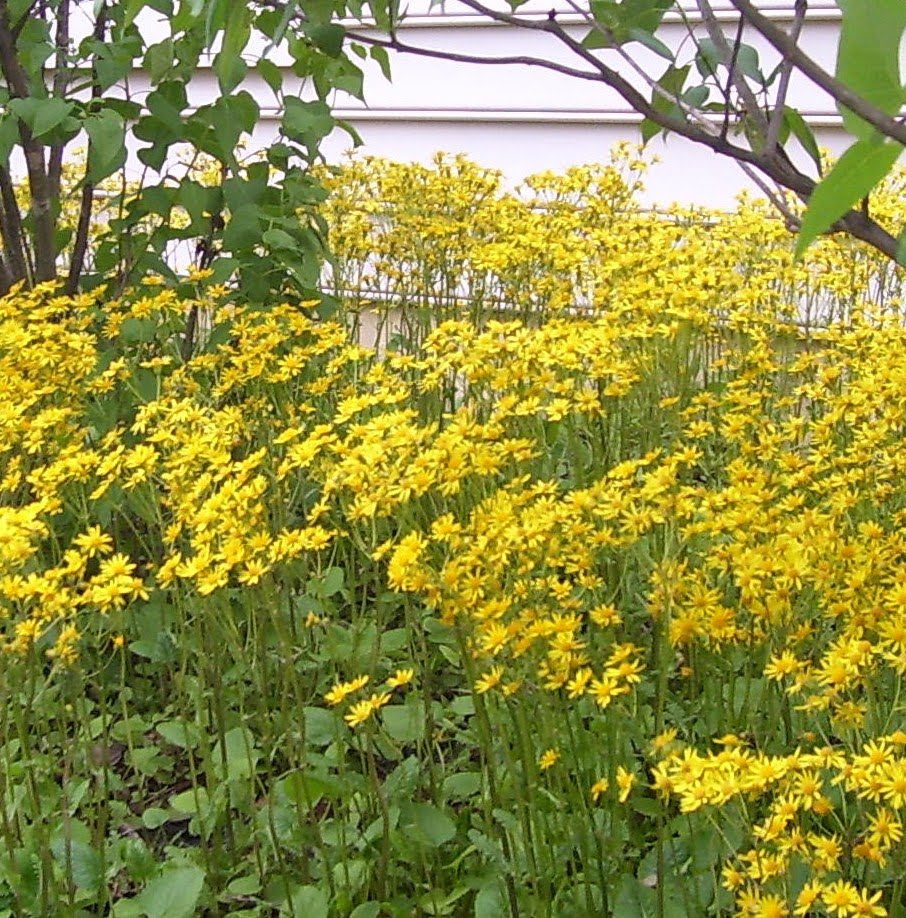
In my last post, I mentioned I would update you with photos of my Senecio aureus after it was cut back. Now you might understand why I kept calling this 18″-24” perennial a groundcover. I also took a photo showing the flower as it is turning to seed. Now I can sit back and relax enjoying this ground cover do its job. The flower is done and cut back. There is nothing to do with this native perennial until next May.

Any opinions on whether this plant looks better before or after the flowers are cut back?

A not so behaved native: Senecio aureus

The Native Senecio Aureus Perennial Plant

I don’t think I would put this in the most underused native catagory, because there are few places I would trust this plant. I found it does not behave very well. In my garden I have let it go wild. I was looking for an aggressive groundcover to reduce my yearly mulching. In my garden, this groundcover is more or less evergreen. It turns a noce burgandy color in the fall. I like the early spring highlights of new green foliage emerging out of last year’s burgandy foliage. I will be cutting off whatever flower is still remaining this weekend. I find the flower is very showy from a distance, but doesn’t do much for me up close. I actually like it best once it is cut back. It leaves a simple low boarder to the garden. I know it sounds like I’m not really endorsing this plant. I thought I should write about it because you don’t see it used often. This weekend my neighbor commented how good they looked this year. I also had a local gardener drive by asking my what it is. I will post more pictures after I cut it back. You can let me know which you like better. You can enjoy this plant, but be ready to watch it run.

Early bloomers

What Plants Are Known To Bloom Early


Star Magnolia

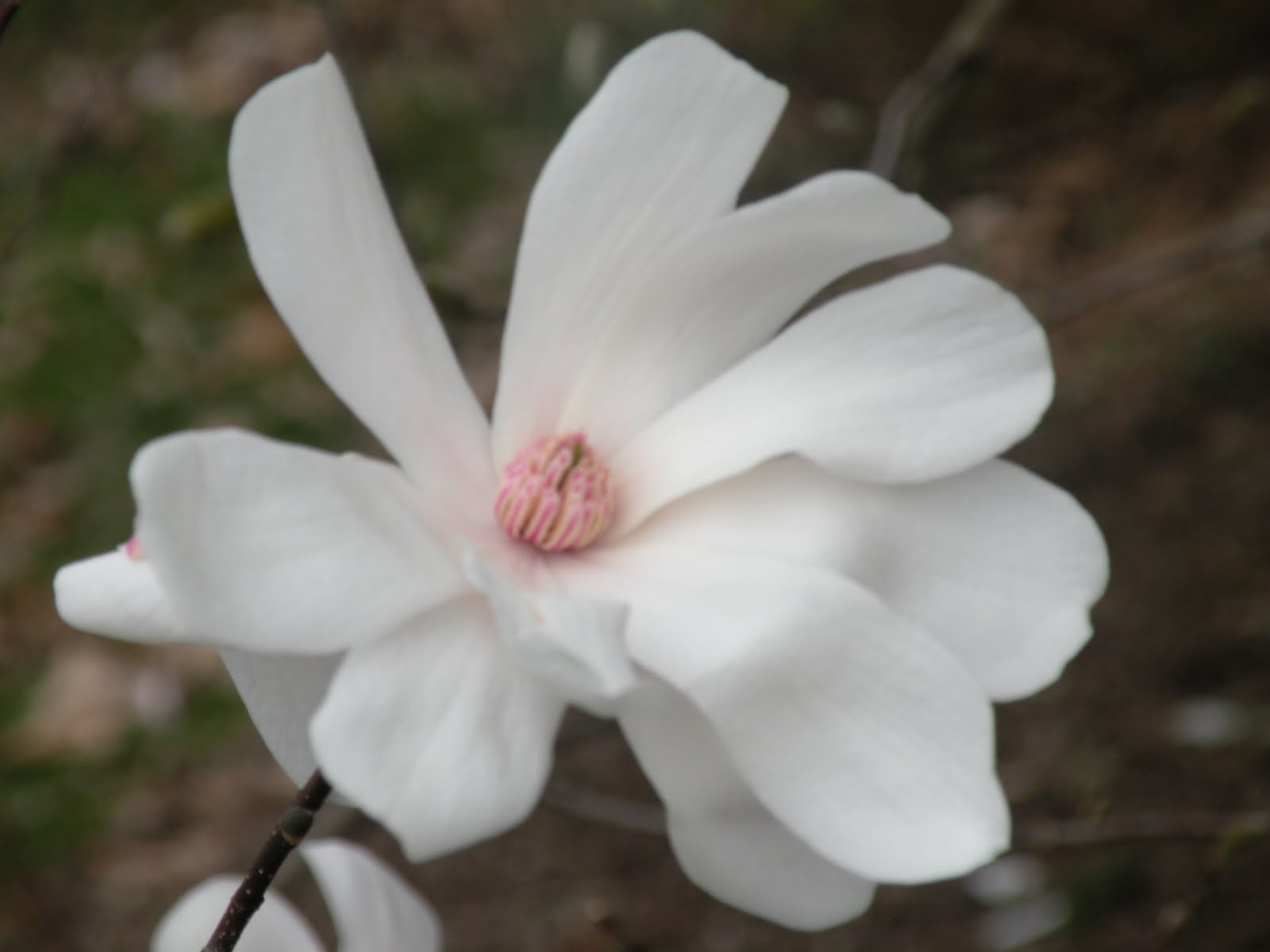
Star Magnolia is the early est blooming magnolia in southeast Pennsylvania. This slow growing deciduous shrub to small tree produces a very showy white flower late March to early April. The fuzzy bids open before the foliage appears producing a 3-4 inch white fragrant flower. Because it does bloom so early frost and cold winds tend to blacken blooms and fall off sooner. This plants slow dense growth habit makes it excellent for a small garden. This Multi stemmed tree has a light gray color on main trunks, the younger twigs have a dark brown color. Star Magnolia need very little pruning unless you are looking for a tree form, that only involves lifting the lower branches to expose the multi able trunk. All pruning should be done after plant has bloomed in spring to not inter fear with next years bud Set.

Cornus mas

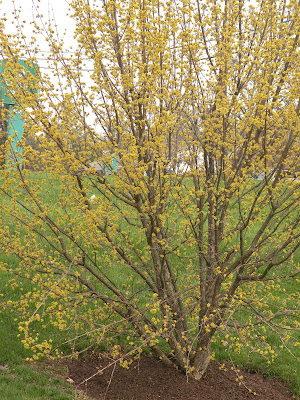
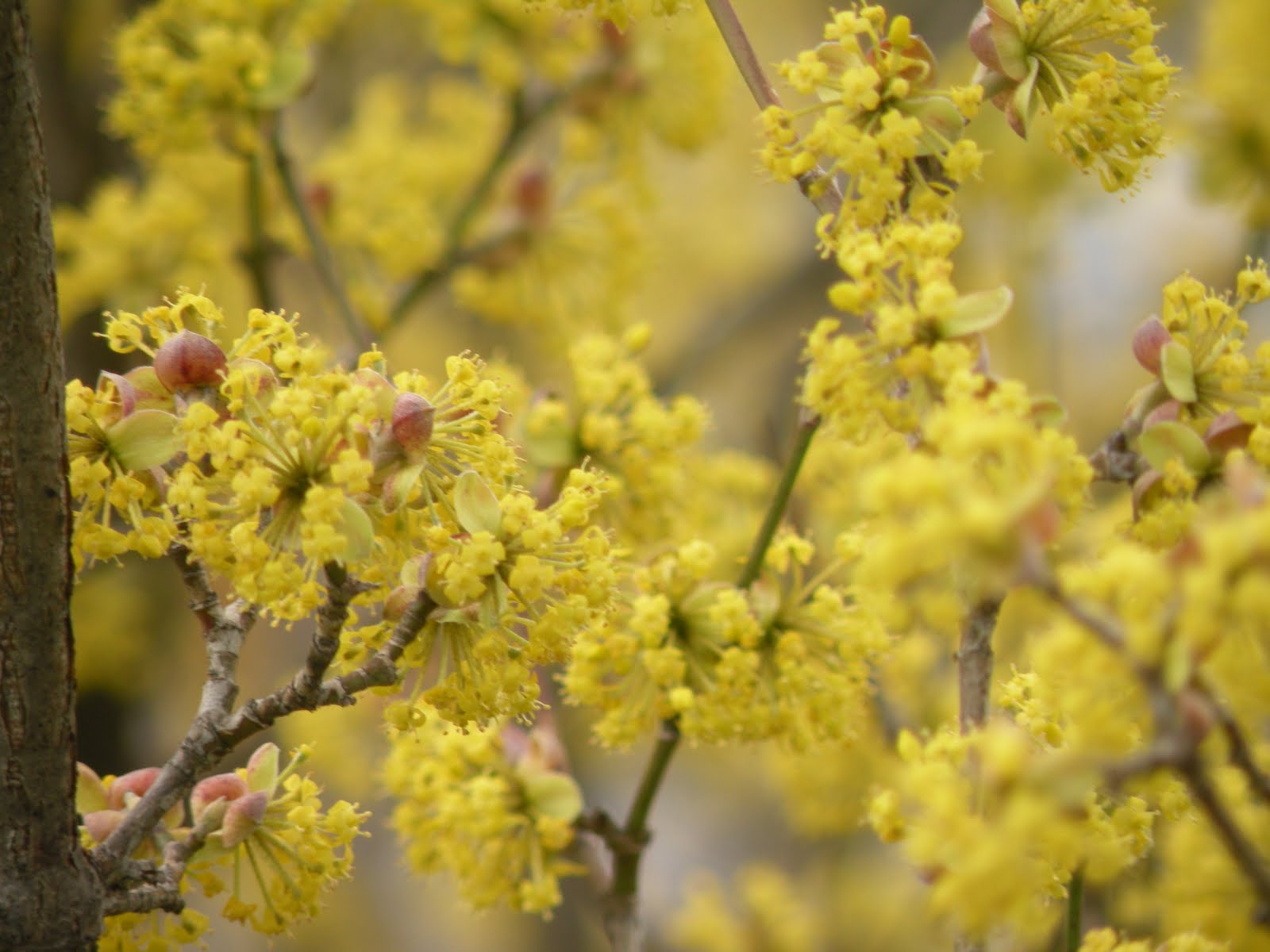
Another excellent early blooming tree is cornus mas, The common name is Cornelian cherry dogwood. This is also a large deciduous shrub to small ornamental tree. The small clumps of yellow flowers appear late winter early spring before the foliage emerges. Can be trained to become a small ornamental tree by lifting lower branches to expose multi stem grayish brown mature trunks. The deep green almost oval shaped leaves turn slightly purple color in fall. Very clean tree, no real insects or disease problems.

Prunis Okame

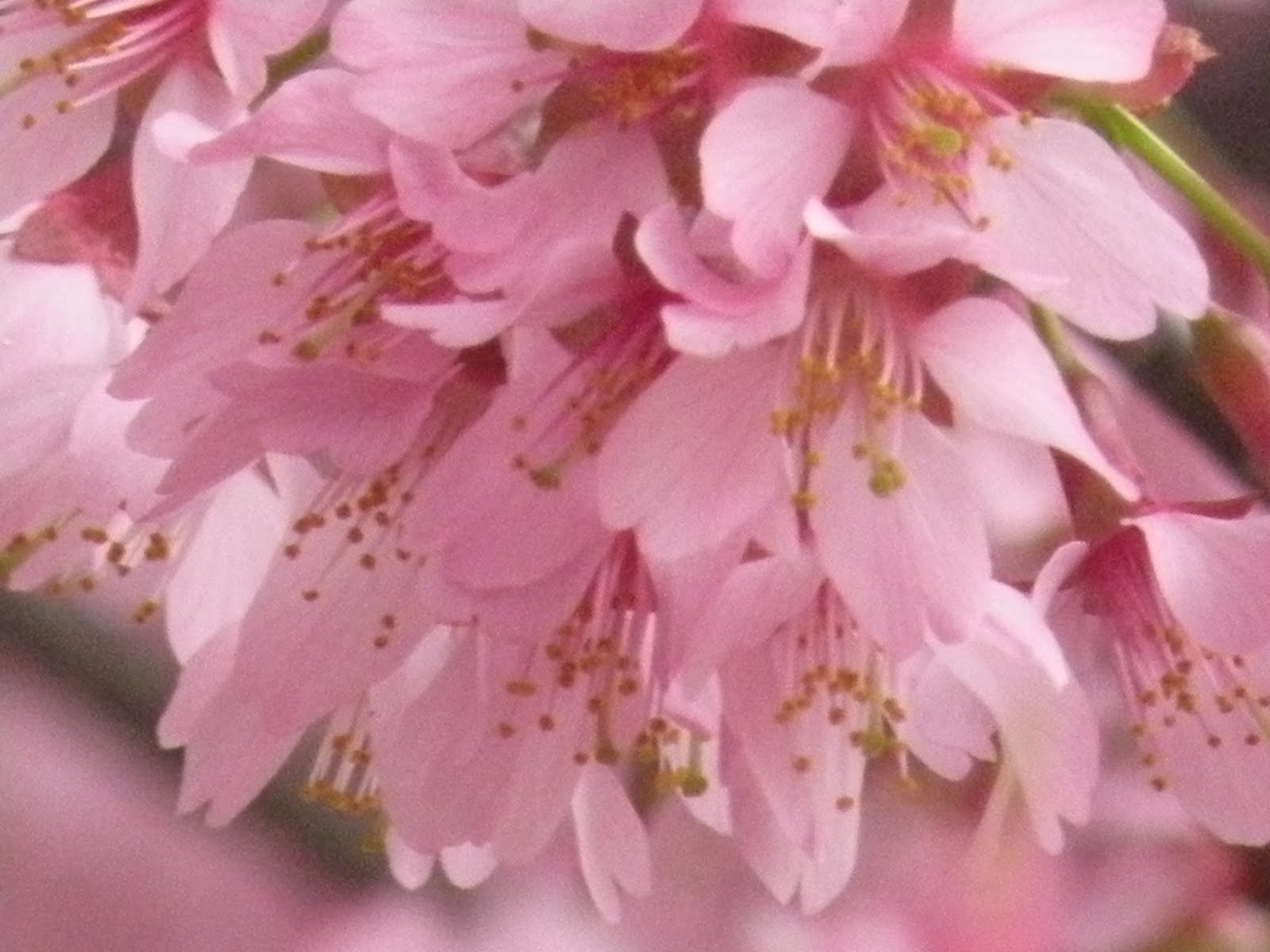
This one of the ear lest blooming Cherry’s in our area. It has a tight upright growth habit that rounds off as it matures. Has very showy reddish-bronze bark that stands out in any landscape. The small pink flowers emerge before the foliage but do not tend to last real long because of rain and cold weather this time of the year.This plant is sometimes used as a street tree or in parking areas because of its tight upright growth habit, its also good for small gardens and hedge row plantings. It has oval shaped leaves that are dark green in color during the summer and develops a rather good fall color of orange and copper. This is three good choices for small early blooming ornamental trees that would look good in any ones garden.

Weed Control

Types of Weed Control For Outdoor Landscaping

Herbicides

One of the most time-consuming jobs in our landscapes is trying to keep our lawns and gardens free of weeds. There are a number of chemicals that are available to use to help with this pain-staking chore. Most of us do not like using any more “chemicals” around our properties than we have to, for fear of them being toxic to our kids, our pets, and the environment. Pre-emergent herbicides have been put under stringent tests by environmental organizations and no safety issues have been found with these products. If you would compare these tests with the same tests done on common table salt you would be very surprised. There are some terms we need to discuss when talking about herbicides. They are:

· Pre-emergent
· Post emergent
· Selective
· Nonselective

These are all terms to describe how synthetic herbicides work to control unwanted plants or weeds. A pre-emergent herbicide will affect the tiny first roots of seedlings thus preventing them from growing, while post emergent herbicides are used on weeds that have germinated or hard to kill weeds such as Canadian thistle. Selective herbicides are used to remove some species of plants and not others. A nonselective herbicide will kill any plants it is applied to; a good example of this is Roundup. While all herbicides help to control weeds, knowing what type of weeds you need to eliminate will help you in selecting the right products to use. Contact us at River Valley Landscaping and we can help you design the right program to achieve optimum weed control.

Pre-emergent

For best results when using pre-emergent herbicides timing is everything. These products should be applied several weeks before germination, and watered in after application so this material can move in the top inches of soil to create a weed barrier. Weed seeds will germinate when soil temperatures are consistently over 50°F. Some gardeners prefer to apply pre-emergent before the Forsythia blooms. In southeast Pennsylvania pre-emergent herbicide should be applied around the 15th of March to control spring and summer weeds and reapplied by September 15th to control fall and winter weeds.

These chemicals can be applied any time during the growing season to control ungerminated seeds. Pre-emergent products have a life of between 60 and 90 days depending on the amount of moisture and soil content. Multiple applications can be made, be sure to read the label so you are not over applying beyond the recommended rates. These products can build up in the soil if overused and can burn root system of many plants.

Preen vs. Snapshot

Preen is a pre-emergent that is found in a lot of garden centers and box stores in the area. Trifluralin is the active ingredient in Preen; it is also the active ingredient in Snapshot but at a much higher rate. Snapshot also has another active ingredient Isoxaben, which gives this product extra protection against some difficult weeds and grasses. Snapshot is the preferred choice of many nurseries and landscape companies because of its wide label. Only select dealers sell these professional products in larger quantities. If you analyze the price of the two products, Snapshot is cheaper per 1,000 square feet and has that wider label.

One of the hardest weeds to control is Nutsedge mainly because one single weed is capable of dropping thousands of seeds. Knowing how to identify this weed and its life cycle is very important in its control. There is a pre-emergent herbicide labeled just for this weed called Freehand.

Since March is not a very busy time in the garden, set aside some time to apply some pre-emergent or contact us at River Valley Landscaping to have it professionally applied for you. Pre-emergent herbicides will not control 100 percent of your weeds, but it should reduce the amount of hand pulling and the amount of more toxic post emergent herbicides you should have to use. Giving you more time to sit back and enjoy your garden.

Smart Design = A Growing Investment

After spending numerous meetings with this client trying to find out their final expectations one of them said to me, ” We have a 1/2 million dollar home with a million dollar view and a 50 cent landscape. Fix it.” That gave us the direction we needed.

I understand this is an unusual property, but that does not change the process of creating a design that last a life time. I realize a landscape is always changing and we need to always look to see what is working and what is not. I’m sorry, but I’m going to share my frustrations with most landscapes. I feel most landscapes are disposable landscapes. They last about 10, maybe 15 years and then they look awful. I am a firm believer that age should increase the value of well designed landscape. I realize most people don’t landscape their home for resale value, but their is no reason why it shouldn’t increase in value. Does anyone want a buyer to pull up to their home and their first thought is wondering how much they have to spend to fix up the landscape?

Invest in a Long-Lasting Landscape Design

Their are two basic things that can ruin the long term value of a landscape. First is the quality of the construction. The products you choose and the installation procedures can play a large role in how long your hardscape elements last. Most hardscape elements will have some level of failure over enough time. I suggest you look hard with your designer at the pros and cons of your hardscape options. More expensive does not always mean longer lasting.

The design can also play a major role in whether your property will increases or decreases in value over time. I always wonder why people install a shrub that grows 8-10 feet and then try to maintain it at 4 feet. Did they ever think maybe there is a better plant choice? I will confess I have done this from time to time. I try to only do this if there is a long discussion with the client. There are times when everyone understands a plant could require more maintenance to achieve a certain look. This should not be taken for granted.

This project has only been in since 2002. I believe it will take a few more years to prove this project has passed the test of time. Almost any project can have great before and after photos. I am most proud how this project keeps getting better each year. The rooms and the views get more defined as time goes by. There is no reason why you can’t have landscapes that looks good when and continues to look better with time. That is a growing investment.

Perennial Plant of the year

The Perennial Plant Association has chosen Baptisia australis or False Indigo as this year perennial plant of the year. This is a very hardy plant that tolerates a wide range of climates. Native to river banks from Vermont south to the Shenandoah Valley.

Specifications Of The Baptisia Australis (False Indigo) Plant


Its blue to purple upright flowers stand out in the garden, Although it only blooms 3 to 4 weeks in late spring to early summer the brilliant colors makes it totally worth it. False Indigo will grow to 3 to 4 feet and spread just as wide, it will grow in full sun or part shade, it can tolerate dry to medium soils and is very drought tolerant. Large black seed pods set in after flowering giving this plant another interesting element. This plant attracts butterflies and is also great for cut flowers and dried flower arrangements. Because it is a self seeder this perennial is best used in border gardens, meadow gardens, woodland gardens, or cottage gardens as it does naturalize very nicely in native soils. We are all looking for plants that are low maintenance and this one certainly fits that. It really is border line between perennial and shrub and has a tendency to flop open in the center, the only real maintenance needed is cutting back in fall or early spring. So take a look at the beauty and features of this outstanding perennial.

Where do I start with a Pool Project?

Here is the pool project I promised you. This client asked me a common question, “We want to build a pool, but when do we get River Valley involved.” My answers was NOW. Most people don’t realize how much everything intertwines. People often fail to contact a landscape designer or architect early enough. Most commonly we find someone builds a house and puts in there walkways, driveway, and sometimes a patio then calls a landscape company. The problem is these things are all put in without any forethought to what is next. We often find walkways are too close to the foundation of the house. This limits the choice of plant material and/or increases the maintenance these plants will need. You would be amazed how many more choices we have by just adding 2 or 3 feet.

When To Contact Landscape Designer When Building A Pool

Another mistake is calling the pool contractor first. Their knowledge is often limited to the design and construction of the pool itself. They usually site the pool for what is easiest for them and not what makes sense overall. I am a strong believer in one should contact a designer before a house is ever built or purchased. A designer can see past what is there and see what could be. I could go on and on about the savings with a well thought out design. The savings even magnify when landscape construction is done simultaneously with the construction of the home. It looks like that is an idea for a future post. When designing my house I had them add a wrap around porch. We added, moved, and deleted windows and doors to improve circulation from the inside to outside. These are decisions that can’t be made without a vision for what is unseen.

This first video shows the process from start to finish. If you enjoy seeing before and afters, I think you will love this transformation. I will mostly mention things you may not pick up in the video. We started working on the design concepts in late fall of ’07. We sat down with the couple to take inventory of what they were looking for and how they plan on using this space. I find a lot of people have a limited idea of what they are looking for and how to communicate it. This is at no fought of the client, it is the designers job to dig deeper. A good designer will listen, but a great designer will hear the difference from what the client is saying and what they mean. Most people don’t realize the possibilities of their project. A well experience designer should be able to guide the client through each step of the process. This client had a good idea of the end goal, but needed help on getting there.

After getting a good feel of what they were looking to achieve, we took measurements and elevations. Elevations were very important on this project. We were dealing with a side sloping yard with a daylight basement. We also were restricted by a sand mound on one side, the reserve on the other side and an easement in the back. Our pool fencing could not not have been moved more then a foot. Although we were restricted side to side the real challenge was the elevations. I felt it was important for the pool house elevation to feel like it was the same elevation as the house. River Valley set all the elevations for this project. If the pool was just a couple inches higher or lower it would have restricted the circulation around the pool deck. By pouring a concrete wall on the lower side of the property, it allowed us to maximize the square footage we had to work with. This wall was raised up past the pool elevation to eliminate the need for fencing on that side of the pool.

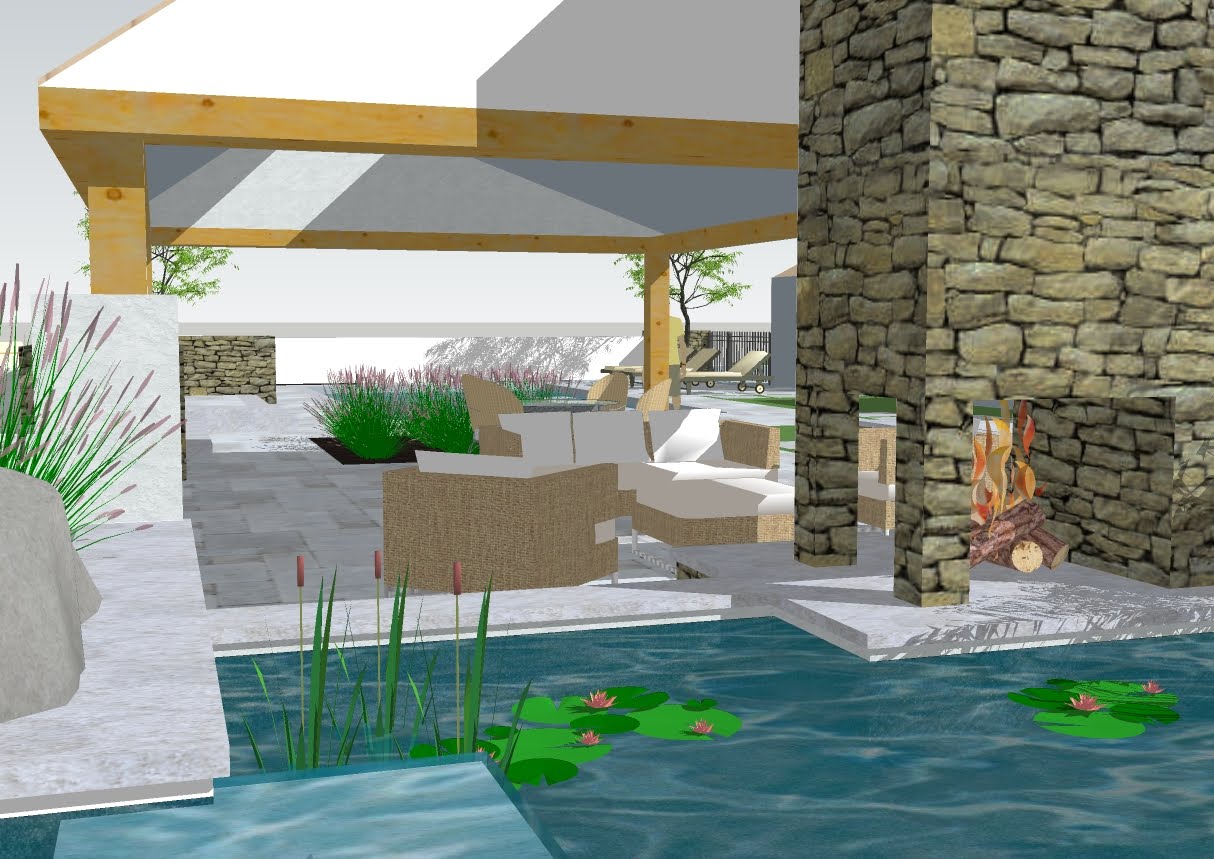
The pool has a sunbathing shelf, a sitting bench running along one entire side and a diving area. The far wall helps nestle in the pool and imply a room inside of a room. The upper pool house terrace is the main entertaining area. It includes the pool house, outdoor kitchen and the hot tub. The original pool house and outdoor kitchen designs were done by River Valley. We then called in the original house architect to redesign the pool house and outdoor kitchen.

All the walls playoff of the house’s architecture. We used a combination of stucco and stone veneer to acheive the continuity. It took us awhile to nail down the patio surface. We considered concrete pavers, stamped concrete and finally decided on a Travertine stone. Travertine most commonly is beige in color. The house was made up of brown tones, so Travertine was very easy to introduce.

River Valley also designed and installed all the outdoor lighting. Lighting extends the usability of any landscape into the evening. I often say you get the biggest bang for your buck with lighting. This home owner complimented things along the way, but nothing like the first night the lights were on. He called me that night and said, “You gotta get overhere and see this.” I put the kids to bed and headed over. It always amazes me each time I go back and see projects at night. I have done lighting so many times, you would think I would know the impact it makes.

This video is from our clients perspective. Hope you enjoy.